News
May 7th, 2026 | 2-minute read
Rebuilding Ecosystems Through Pollinators in Post-Mining Landscapes
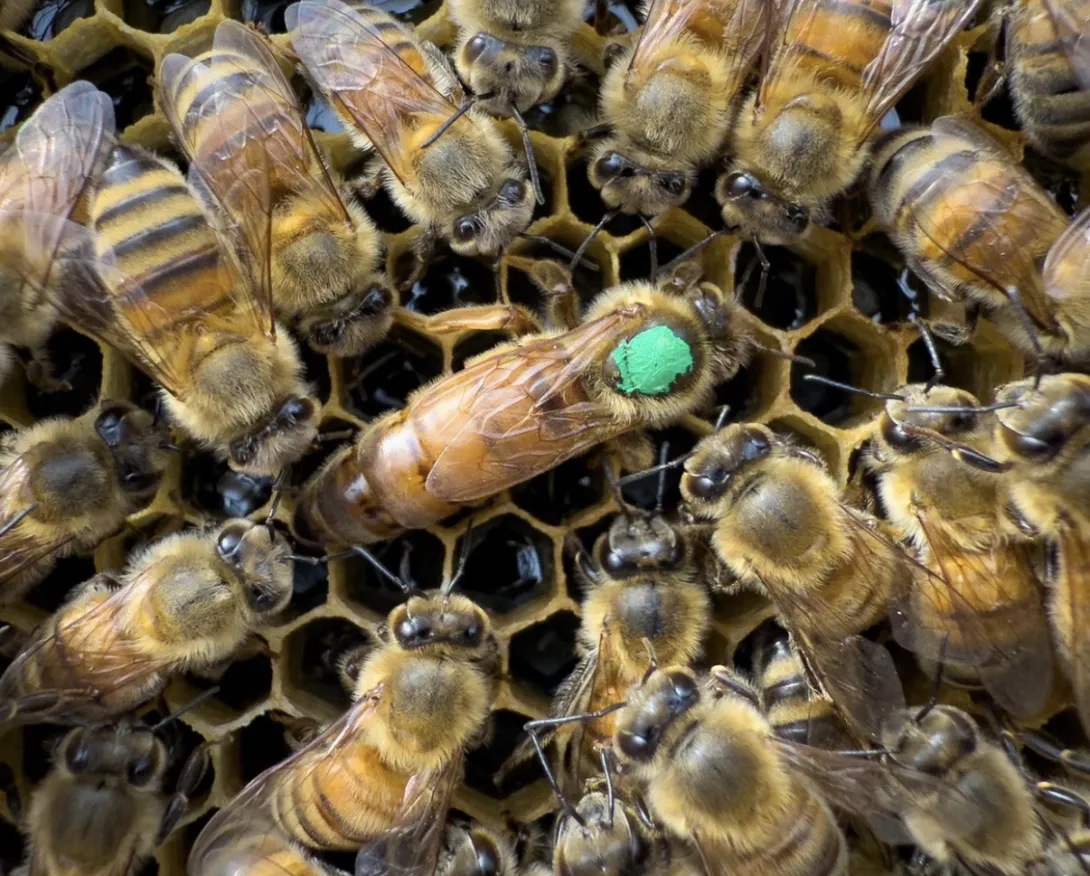
Some may wonder what work honey bees have to do on a mine site, but for one Laurentian University faculty member, the connection is critical.

(May 7, 2026) - Some may wonder what work honey bees have to do on a mine site, but for one Laurentian University faculty member, the connection is critical.
Mateus Pepinelli is an Assistant Professor in the School of Natural Sciences from Jundiaí, São Paulo, Brazil. Fascinated by insects from a young age, he has travelled across North and South America to study entomology. His early work focused on black flies, one of his favourite insects, which led to a collaboration with Dr. Douglas Currie at the Royal Ontario Museum and brought him and his family to Canada.
In 2019, his interest in honey bees grew when he was hired to manage the BeeCSI project funded by Genome Canada. This role connected him with beekeepers across southern Ontario, the Ontario Beekeepers’ Association, and researchers nationwide. “That experience sparked my passion for honey bee research, especially in understanding how bees interact with their environment.”
Pepinelli’s research focuses on plant–pollinator interactions and how these relationships reflect ecosystem health. His work examines how environmental stressors such as pollution, wildfires, agrochemicals, heavy metals, and climate change, affect pollinators and the timing of their development. Because these interactions rely on precise timing, disruptions can create mismatches that reduce successful pollination.
He is particularly interested in whether these interactions can serve as indicators of ecosystem recovery or early warning signs of environmental stress. His goal is to understand how well reclamation efforts restore pollinator communities and the interactions that sustain ecosystems, ultimately guiding better practices that support biodiversity and long-term ecosystem health.
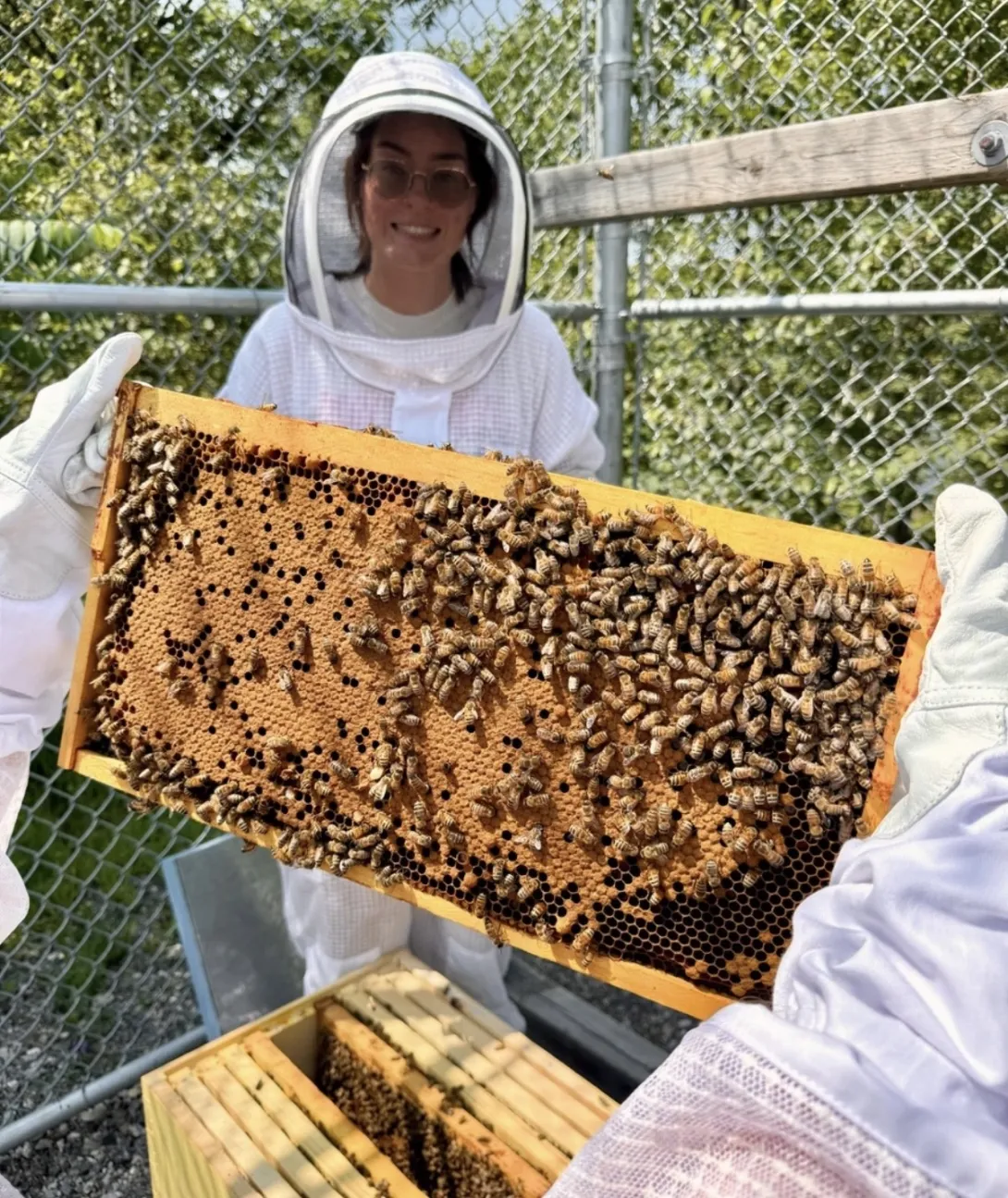
Through the IAMGOLD President’s Innovation Fund for Strategic Investment, Pepinelli is collaborating with IAMGOLD’s environmental team, including Jessica Tratnik and Genevieve Sultycky. Since Fall 2025, they have aligned their research with a shared biodiversity framework focused on post-mining recovery. This partnership has supported the installation of three apiaries at the Côté Gold Mine, mirroring a design used at Laurentian University to allow direct comparisons. The team will also collect data such as eDNA to track biodiversity and ecological interactions over time.
“What I hope people take away from this research is that pollinators are not just important, they are essential indicators of how well ecosystems are functioning and recovering.” Restoring landscapes is not only about replanting vegetation, but about rebuilding the interactions that sustain ecosystems.
This two-year project is just beginning, laying the groundwork for long-term ecosystem monitoring. Pepinelli is especially excited to involve students in setting up apiaries, installing bees, and collecting data, creating hands-on learning opportunities while studying how ecosystems recover over time.
Continue reading

Annual MineOpportunity Games Return to Laurentian with Record Attendance
MineOpportunity continues to inspire students across the north after 20 years
Oct. 21, 2026
Read more

Laurentian University Invites Future Students to Fall Open House
Laurentian University is pleased to announce its Fall Open House on Saturday, October 24, 2026, from...
Oct. 20, 2026
Read more

How the Helene Babin Jacob Bursary Empowers Master's Student Shincy Shaji
For Shincy Shaji, the path to advanced nursing practice has been defined by resilience, dedication, ...
Oct. 20, 2026
Read more

Accessibility Support During ADHD and Learning Disabilities Awareness Month
October marks Attention-Deficit/Hyperactivity Disorder (ADHD) and Learning Disabilities Awareness Mo...
Oct. 19, 2026
Read more

Laurentian University Previews 12th Year of Intercultural Ride-Along Initiative
As community partners prepare for the 2026–27 cohort of the Intercultural Ride-Along and Job Shadow ...
Oct. 15, 2026
Read more
More to Explore
Explore Laurentian University

Study at Laurentian University

Browse Services and Support
