
News
August 18th, 2026 | 2-minute read
Researchers Unlock History at Manitoulin’s Sheguiandah Archaeological Site
One of Northern Ontario’s most significant historical landmarks continues to connect past and present through a unique collaboration between a Laurentian Professor Emeritus and a current student.

August 18, 2026— One of Northern Ontario’s most significant historical landmarks continues to connect past and present through a unique collaboration between a Laurentian Professor Emeritus and a current student.
Located on Manitoulin Island, the Sheguiandah archaeological site was once the center of international debate after excavations in the 1950s suggested artifacts could date back 25,000 years. In the 1990s, a collaborative project spearheaded by local First Nations leadership and researchers brought in Dr. Patrick Julig, now Professor Emeritus at Laurentian, to settle the timeline using geo-archaeology.
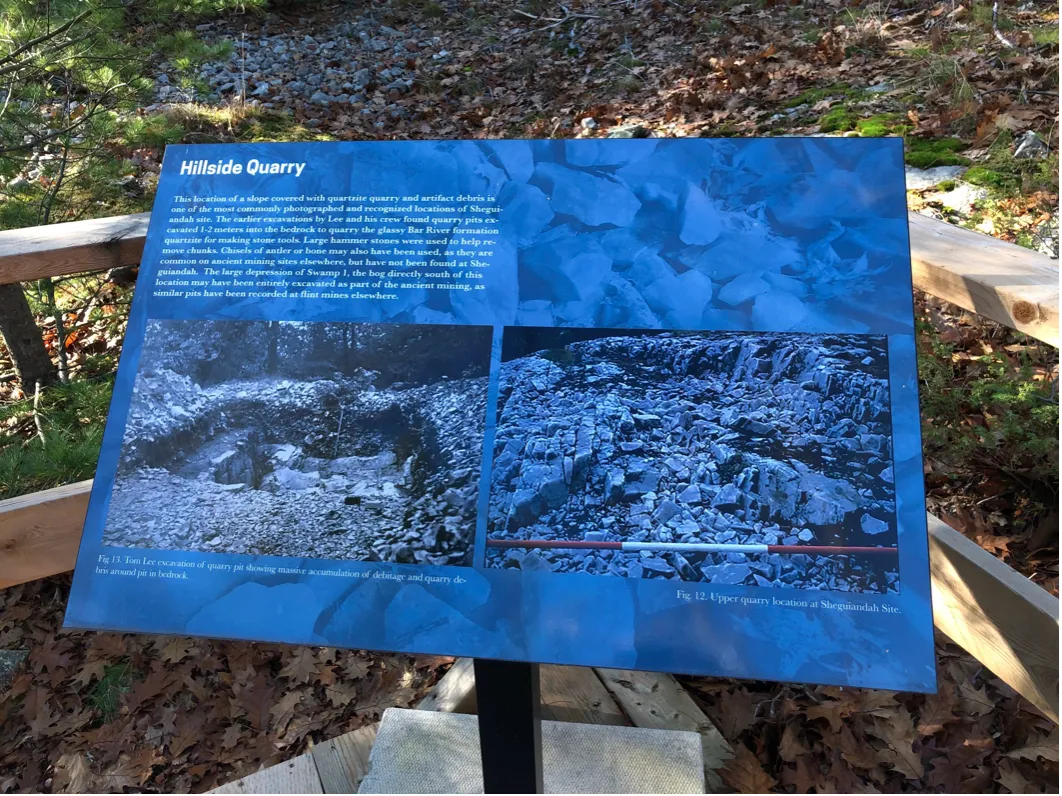
By analyzing soil sediments, radiocarbon dates, and ancient pollen records, Dr. Julig’s team proved human activity at the ancient quartzite quarry dates back roughly 9,500 to 10,500 years—a landmark finding published in his 2002 book and built into the exhibits at the Centennial Museum of Sheguiandah.
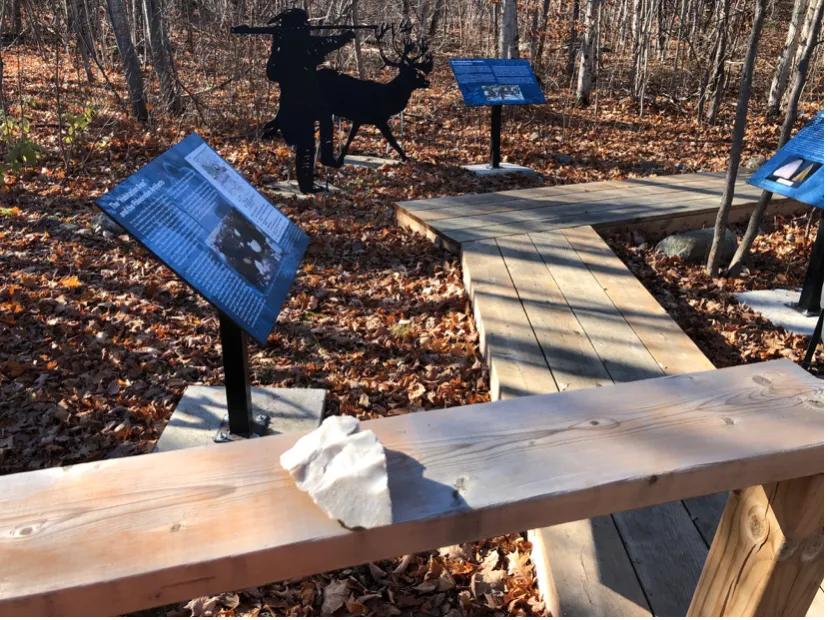
Today, that academic legacy continues through Laurentian history student Chris Hogge. A Manitoulin local whose family has deep roots on the island, Hogge has spent the last five seasons guiding visitors through the site's historical walking trail and interpreting the museum's exhibits.
"Working with Dr. Julig and learning directly from his foundational research has been incredible," says Hogge, who is currently completing a Specialization in History at Laurentian. "We focus on conveying the rich scientific history of the site while respecting that the cultural stories belong to local First Nations to tell. Taking complex science and making it accessible to tour groups connects directly back to what I study in my courses."
"This project was always about collaboration—with First Nations leaders, geologists, and local communities," adds Dr. Julig. "Seeing Laurentian students today sharing this history with the public is a wonderful continuation of that legacy."
To book a guided historical walking tour or visit the exhibits, visit shegsite.ca or contact the Centennial Museum of Sheguiandah at 705-368-2367.
Continue reading

Annual MineOpportunity Games Return to Laurentian with Record Attendance
MineOpportunity continues to inspire students across the north after 20 years
Oct. 21, 2026
Read more

Laurentian University Invites Future Students to Fall Open House
Laurentian University is pleased to announce its Fall Open House on Saturday, October 24, 2026, from...
Oct. 20, 2026
Read more

How the Helene Babin Jacob Bursary Empowers Master's Student Shincy Shaji
For Shincy Shaji, the path to advanced nursing practice has been defined by resilience, dedication, ...
Oct. 20, 2026
Read more

Accessibility Support During ADHD and Learning Disabilities Awareness Month
October marks Attention-Deficit/Hyperactivity Disorder (ADHD) and Learning Disabilities Awareness Mo...
Oct. 19, 2026
Read more

Laurentian University Previews 12th Year of Intercultural Ride-Along Initiative
As community partners prepare for the 2026–27 cohort of the Intercultural Ride-Along and Job Shadow ...
Oct. 15, 2026
Read more
More to Explore
Explore Laurentian University

Study at Laurentian University

Browse Services and Support
