News
November 6th, 2026 | 3-minute read
Sudbury Impact Structure Recognized as Geological Heritage Site
The Sudbury Impact Structure has been recognized as one of the world’s most significant geological sites. The International Union of Geological Sciences (IUGS) has included it in “The Third 100” Geological Heritage Sites, announced at the IUGS Geoheritage Event in Portugal.

November 6, 2026 — The Sudbury Impact Structure has been recognized as one of the world’s most significant geological sites. The International Union of Geological Sciences (IUGS) has included it in “The Third 100” Geological Heritage Sites, announced at the IUGS Geoheritage Event in Portugal.
The designation brings international recognition to Sudbury as a place where scientists and students can study how massive impacts shape planets and concentrate valuable metals. It highlights the region’s role as a natural classroom, connecting research on Earth’s history with the mineral deposits that have helped shape its economy.
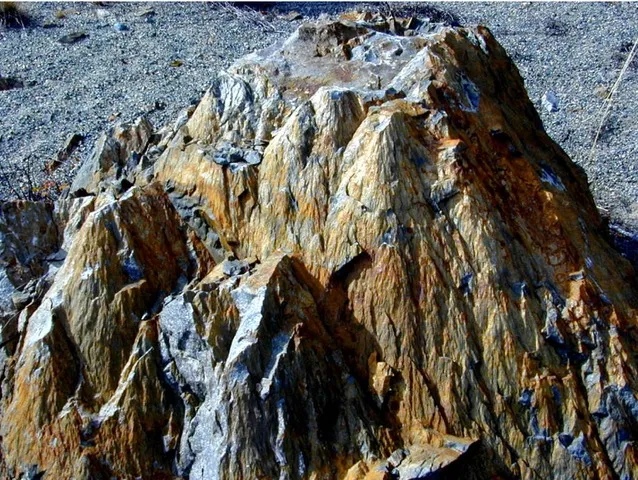
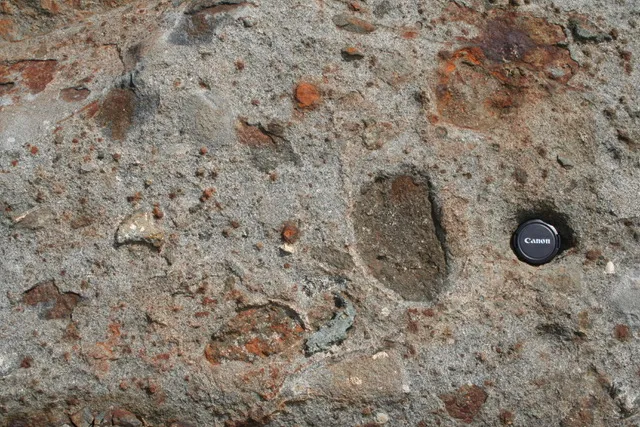
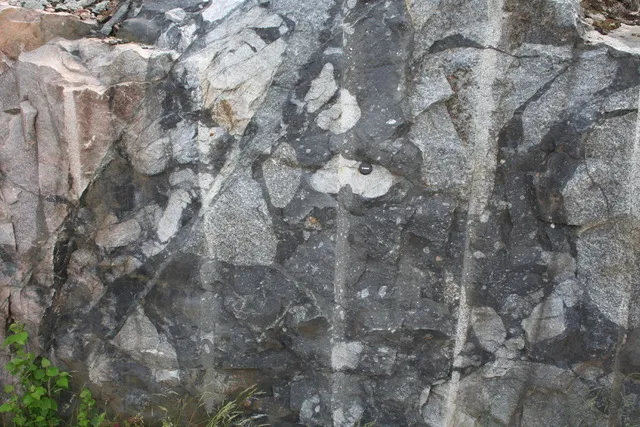
“The Sudbury Structure is truly one of the crown jewels of planetary science,” said Dr. Michael Lesher. “What makes Sudbury globally unique is not just the scale of the impact, but the remarkable degree of exposure. Over a billion years of tectonic history tilted and preserved the crater, while Pleistocene glacial scouring revealed clear cross-sections of shocked rock, crater-floor dykes, and the world’s largest impact melt sheet. It is the premier natural classroom for studying impact cratering and ore deposit genesis.”
Formed approximately 1.85 billion years ago by a massive asteroid or comet impact, the Sudbury Impact Structure is one of the world’s oldest, largest, and best-studied impact sites. Its exposed rocks have helped researchers understand impact events and the formation of nickel-copper-platinum deposits, while supporting generations of research and education at Laurentian University and around the world.
The IUGS Geological Heritage Sites initiative, first launched in 2022, identifies key sites worldwide that have played an essential role in the development of geological science. With the announcement of the Third 100, Sudbury became one of 300 sites worldwide recognized for their scientific importance and contribution to understanding Earth’s history. It is one of three Canadian sites included in this latest collection, alongside the Charlevoix Astrobleme in Quebec and the End-Permian Mass Extinction at the Opal Creek Section in Alberta, bringing the total number of recognized Canadian sites to 13.
“This designation highlights the extraordinary scientific value that exists right in our backyard,” said Dr. Tammy Eger, Vice-President, Research at Laurentian University. “It reflects generations of pioneering research carried out by Laurentian faculty, alumni, students, and collaborative partners in government and industry who have positioned Sudbury at the forefront of global earth science.”
The nomination was put forward by Dr. Michael Lesher, Professor Emeritus, Laurentian University; Dr. David Wood, Consulting Geological Engineer; Ruth Debicki, Laurentian alumna and retired Ontario Geological Survey geologist; and Dr. Michel Houlé, Research Scientist with the Geological Survey of Canada.
Sudbury’s scientific prominence spans decades:
- Sudbury is one of the most intensively studied impact sites on Earth. Researchers continue to visit the area to learn about impact processes and make discoveries with applications to other sites.
- The structure is home to Canada’s largest mining region and more than a century of mining activity. Its nickel, copper, and platinum-group element deposits have contributed to the regional and national economy for more than 140 years.
- In the early 1970s, the National Aeronautics and Space Administration (NASA) conducted field exercises for Apollo 16 and Apollo 17 astronauts in the Sudbury Basin, where they studied geological features created by impacts before their lunar missions.
For more information on the IUGS Geological Heritage Sites and the complete “Third 100” list, visit iugs-geoheritage.org.
Continue reading

Laurentian Alumnus Ralph Ahrbeck Returns for November Alumni Speaker Series
Long before leading multi-billion-dollar global business transformations across Europe and Asia, Ral...
Nov. 06, 2026
Read more

Graduate Spotlight: Isabelle Mallette
After years of supporting students in the classroom, Isabelle Mallette wanted to help address the ch...
Nov. 05, 2026
Read more

Joint Federal and Provincial Support Secures $4.3 Million for New Centre for Interprofessional Healt...
Laurentian University is celebrating a major joint investment of over $4.3 million from both the Gov...
Nov. 05, 2026
Read more

Laurentian Researchers Join Team Canada at Berlin Science Summit
Three researchers from Laurentian University have been selected to represent Canada internationally ...
Nov. 04, 2026
Read more

Graduate Spotlight: Walter Amador
Ahead of Laurentian University’s Fall Convocation on November 7, the university is celebrating gradu...
Nov. 04, 2026
Read more
More to Explore
Explore Laurentian University

Study at Laurentian University

Browse Services and Support
